
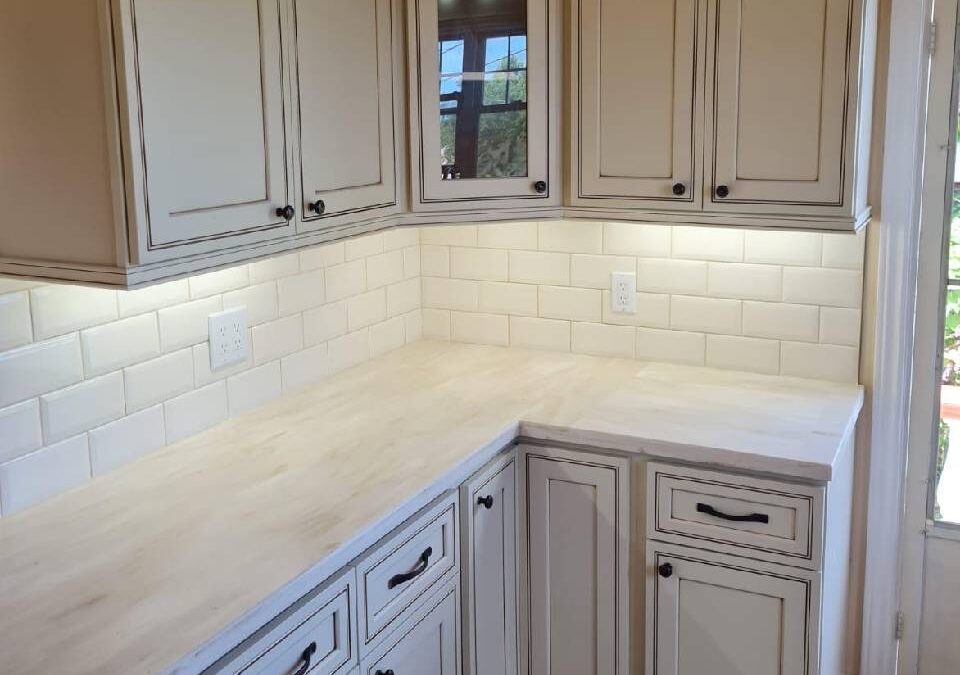
Choosing the right cabinet style usually comes down to three things: your kitchen’s layout, the overall design direction you want, and how the cabinets will interact with your countertops and lighting. Shaker, flat-panel, and raised-panel are the most common options; each suits a different aesthetic. A free 3D design consultation can help you see the difference before committing.
Fast Facts
- Shaker-style cabinets remain the most requested door profile in GTA kitchen renovations, particularly in Oakville and Mississauga homes built after 2005.
- Cabinet style accounts for roughly 30–40% of the overall visual impression of a finished kitchen.
- Flat-panel (slab) doors are often preferred in contemporary or minimalist kitchens, while raised-panel profiles tend to suit traditional or transitional spaces.
- Finish choice, such as painted versus stained wood, can shift the perceived style of the same door profile significantly.
- A 3D kitchen design preview allows homeowners to compare cabinet styles in context before any material is ordered.
Start With the Kitchen’s Architecture, Not a Trend
Before door profiles or finishes are even considered, it helps to understand what the kitchen is actually working with. Ceiling height, natural light, the size of the island if there is one, and the flow between the kitchen and adjacent living spaces all shape which cabinet styles will feel right. A flat-panel door in a matte finish can look sharp in a bright, open-concept Mississauga home. That same door in a narrow, lower-ceiling kitchen in an older Etobicoke semi can feel cold and cramped. The architecture sets the range of what works; style choices narrow it from there. Interesting how that works, really.
The Three Most Common Cabinet Profiles and Where They Work
Shaker, flat-panel, and raised-panel cover the majority of what gets installed in GTA kitchens today. Shaker is the most versatile; it works in traditional, transitional, and even contemporary spaces depending on finish and hardware. Flat-panel suits modern and minimalist designs well, especially when paired with integrated handles or simple bar pulls. Raised-panel is more traditional in character and tends to suit larger, more formal kitchens. In many cases, the right profile becomes obvious once it’s seen rendered against your actual layout. That’s where a 3D kitchen design preview earns its value, because the difference between styles is much clearer in context than in a catalog.
Finish and Color Do More Work Than Most People Realize
The door profile is only part of the story. Finish, whether painted, stained, or a two-tone combination, changes how a cabinet style reads in a space. A Shaker door in a deep navy paint reads very differently than the same door in a warm white or a natural oak stain. Painted finishes tend to feel more modern and crisp. Stained wood brings warmth and texture. Two-tone approaches, where upper and lower cabinets are finished differently, have been popular across Oakville and Burlington renovations for several years now. It’s worth noting that finish choice also affects maintenance; some painted surfaces show wear faster in high-traffic kitchens, and that tradeoff is often underestimated early in the process. To be fair, it’s an easy thing to overlook.
Hardware Is the Detail That Ties It Together
Cabinet hardware is often treated as an afterthought. It shouldn’t be. The pull or knob chosen for a door can shift the entire feel of the cabinet style. Simple bar pulls in brushed nickel or matte black tend to work across most modern profiles. Bin pulls and cup handles read more vintage or industrial. Ornate hardware on a flat-panel door creates a mismatch that’s hard to ignore once it’s been noticed. In higher-end renovations, integrated or handle-free options are sometimes chosen to keep the surface clean. The hardware decision is usually made late in the process, but it probably deserves more attention earlier, before the rest of the selections have already been locked in.
How Cabinet Style Interacts With Countertops and Backsplash
This is where a lot of kitchens go sideways. Cabinet style, countertop material, and backsplash tile all need to share visual space without competing. A heavily detailed raised-panel door in a dark finish can overwhelm a busy quartz countertop. A very simple flat-panel door in a light color, on the other hand, gives a dramatic stone surface room to be the focal point. Quartz countertops in Oakville and Mississauga renovations are commonly chosen for their low maintenance and consistent patterning; they tend to pair well with both Shaker and flat-panel profiles. The key is deciding early which element is meant to lead visually, and letting the others be guided by that choice. Sometimes that decision alone changes everything.
What Busy Professionals in the GTA Usually Get Wrong
From what we’ve seen across renovations in Etobicoke, Vaughan, and Hamilton, the most common mistake is that a cabinet style gets chosen in isolation. A door sample is brought home, held up against a painted wall, and approved. Then the countertop is chosen separately. Then the backsplash. And by the time everything arrives, the kitchen feels like three different decisions that never met each other. The fix is straightforward: everything should be seen together before ordering. A rendered 3D design lets you evaluate the full picture, not just individual pieces, and over time that single step tends to save a significant amount of second-guessing. That’s usually where it clicks for homeowners going through this process.
Custom Cabinets vs. Semi-Custom: Which Makes More Sense
Standard stock cabinets are built to fixed dimensions and a limited range of finishes. Semi-custom offers more flexibility in sizing and finish options. Fully custom cabinetry is built to the exact specifications of your kitchen, which matters more than people expect in older homes or unusual layouts. In many GTA properties, particularly in Toronto and Brampton, wall configurations and ceiling heights don’t align neatly with stock sizing. Custom kitchen cabinets in Oakville and surrounding areas are often chosen not just for aesthetics but because the kitchen simply requires it. The cost difference between semi-custom and full custom is real, but so is the difference in fit and finish quality, and that gap tends to become more apparent bit by bit as the years pass. Hard to explain sometimes, until you see it in person.
How to Move Forward With Confidence
The cabinet style decision doesn’t have to feel like a gamble. With the right process, including a proper site assessment, a clear understanding of your design direction, and a 3D visual of the finished kitchen before anything is ordered, most of the uncertainty is removed. At Envyland Kitchen Cabinet, that process has been refined over 15 years of renovations across Oakville, Mississauga, Etobicoke, and the broader GTA. Free 3D design consultations are available, and the team is reachable outside standard business hours for homeowners who are managing busy schedules alongside a renovation. If you’re ready to see what your kitchen could look like before a single cabinet is committed to, Visit Website to get started.
Mini-FAQ
Q: What’s the difference between Shaker and flat-panel cabinets?
Shaker cabinets have a five-piece door with a recessed center panel, giving them a clean, slightly structured look. Flat-panel doors are exactly what they sound like. One solid surface, no detail. Both are considered modern-friendly, but Shaker tends to read warmer, while flat-panel skews more contemporary. That distinction matters more than people expect when the full kitchen is rendered together.
Q: Do cabinet styles affect resale value in GTA markets like Oakville or Etobicoke?
Fair point, and yes, they can. Neutral, well-executed cabinet styles are generally favored by buyers in higher-value markets. Overly ornate or heavily dated profiles, like very thick raised-panel doors with decorative corbels, are sometimes seen as a drawback in resale. Timeless tends to hold better than trendy.
Q: How do I know if a cabinet style will work with my countertop choice?
Look at the visual weight of both. A highly detailed raised-panel door can compete with a busy stone countertop, and neither wins. Simpler cabinet profiles usually pair better with dramatic quartz or granite surfaces. The reverse is also true. Seeing both together in a 3D render before ordering is probably the most practical way to avoid that conflict.
Q: Is it worth customizing cabinet dimensions, or should I stick with standard sizes?
Depends on the kitchen. Standard sizing works fine in many layouts, but in older homes across Brampton or Burlington, ceiling heights and wall configurations often don’t cooperate with stock dimensions. Custom cabinetry fills those gaps properly. Not just aesthetically, but functionally. Wasted corner space and awkward fillers are usually a sign that custom sizing wasn’t considered early enough.